
From hive to honey: Learning from local beekeeping communities in Tanzania
/
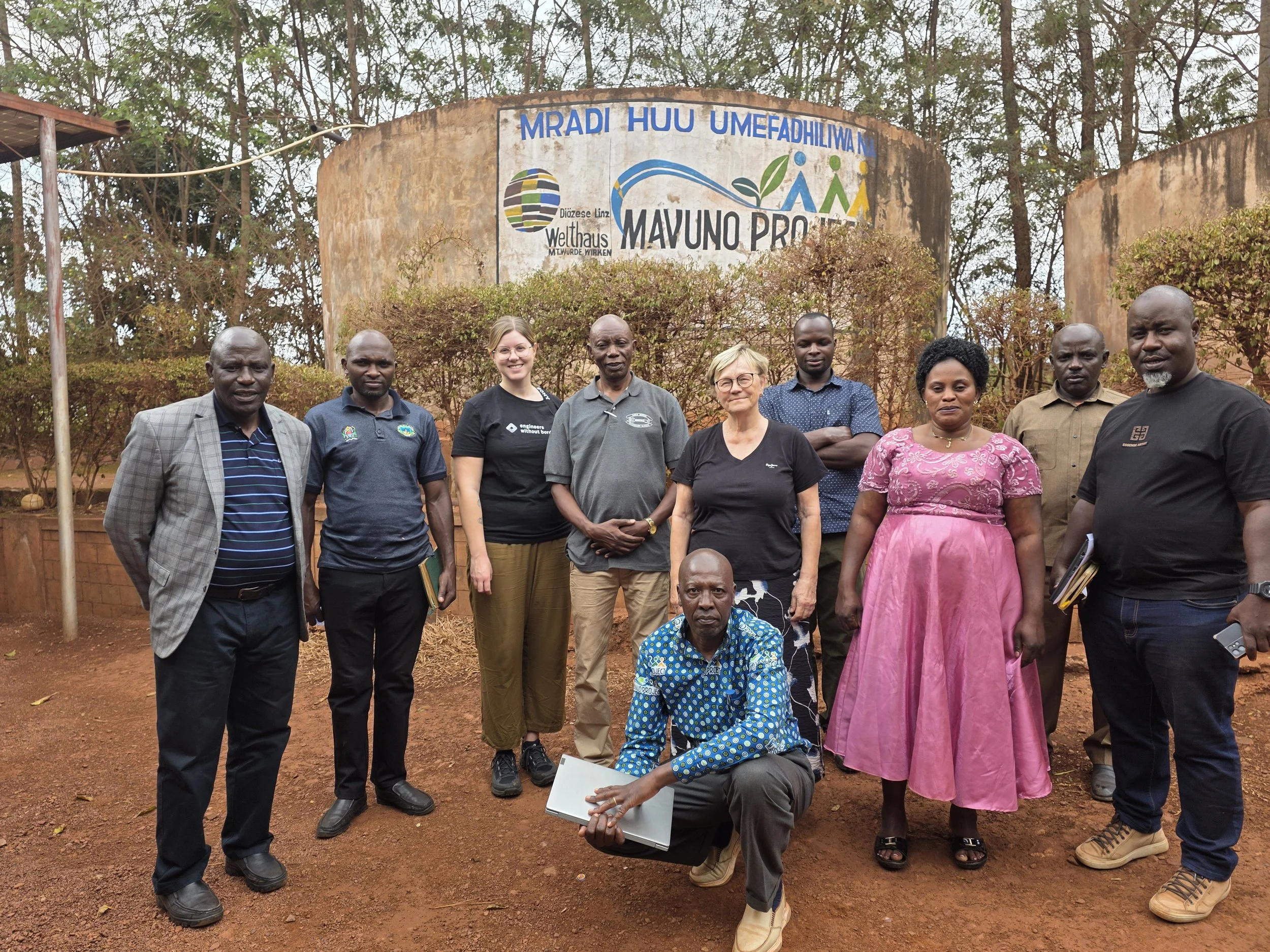
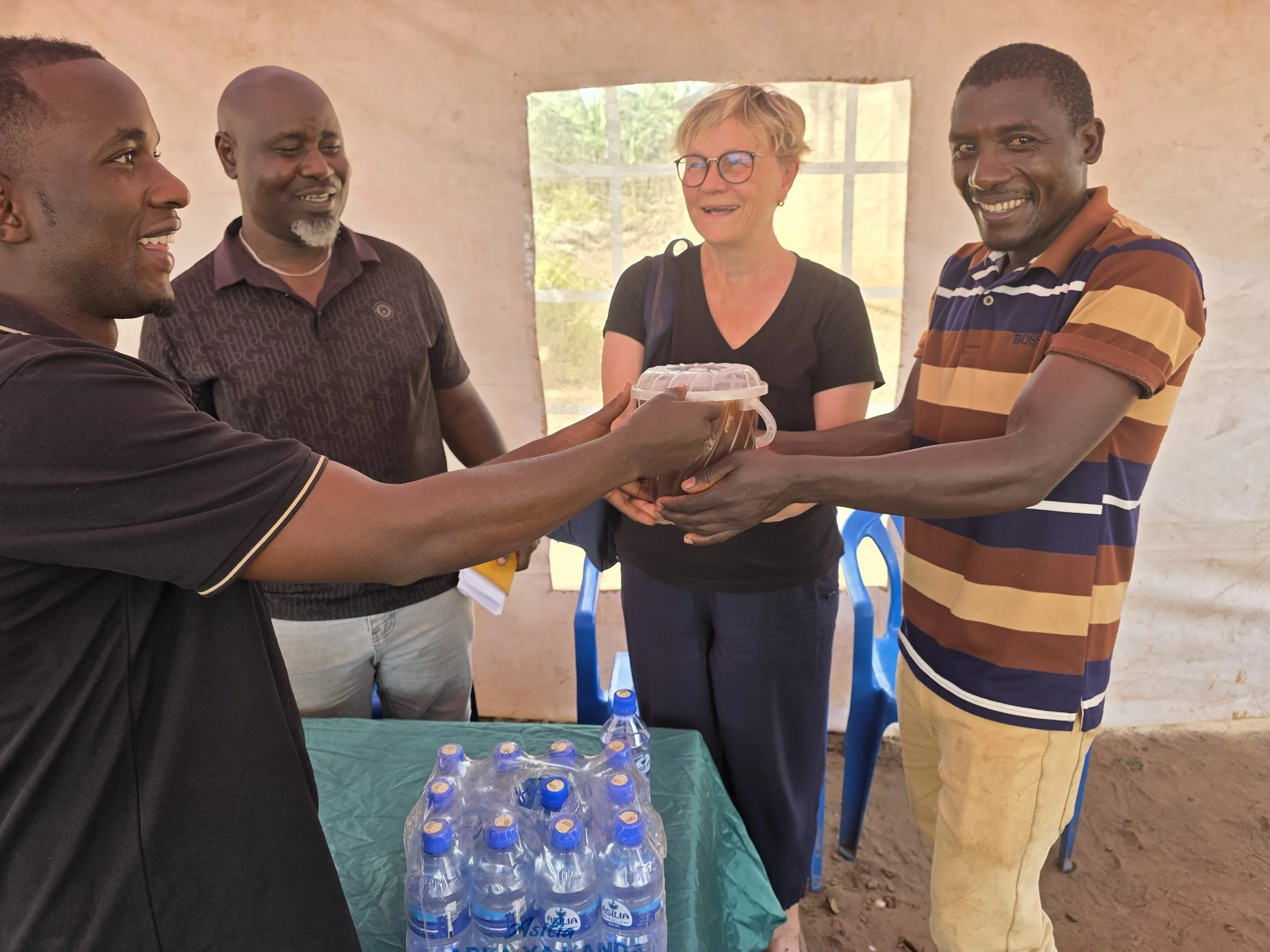
More than 2,000 farmers have joined the Durable Beekeeping Project since it began in Tanzania in 2025. In September and October, Engineers Without Borders Sweden's Susanne Hurtig and Maja Väpnare visited the project to meet local beekeepers, exchange knowledge and explore opportunities and challenges together with our local partner, Mavuno Project.
The Beekeeping Project works with local communities to strengthen beekeeping, develop local skills and create opportunities throughout the honey value chain. The project operates in Kyerwa and Karagwe districts in the Kagera region, as well as Urambo district in the Tabora region.
With agreements now established with all three district administrations, local Beekeeping Officers are helping to promote the project and engage more farmers. So far, over 2,000 farmers have joined, with an ambition to reach 9,000 across the three districts.
Understanding the journey from hive to honey
To better understand the project and its local context, the visit followed the honey value chain, from beekeeping and hive production to processing and potential market opportunities.
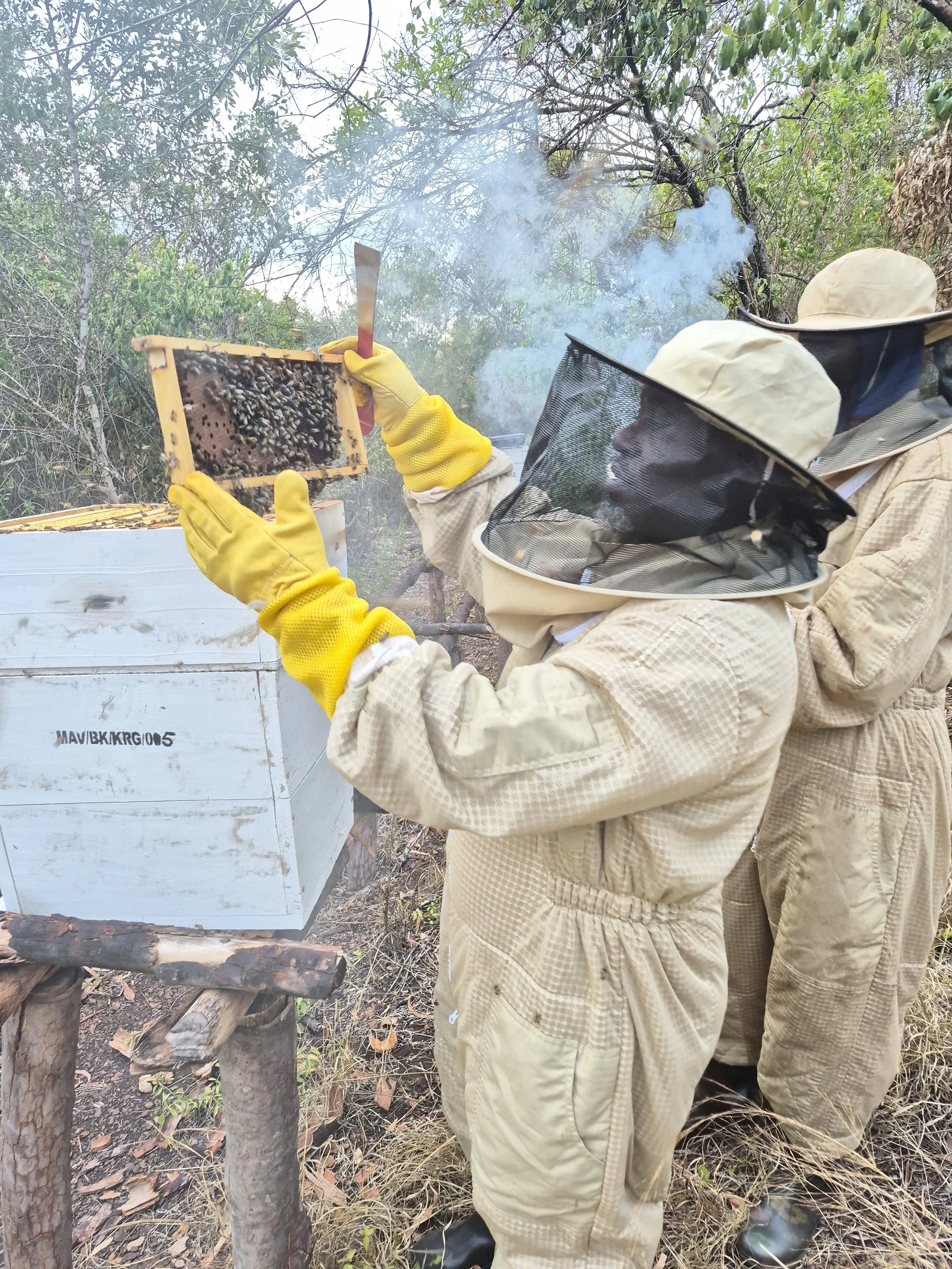
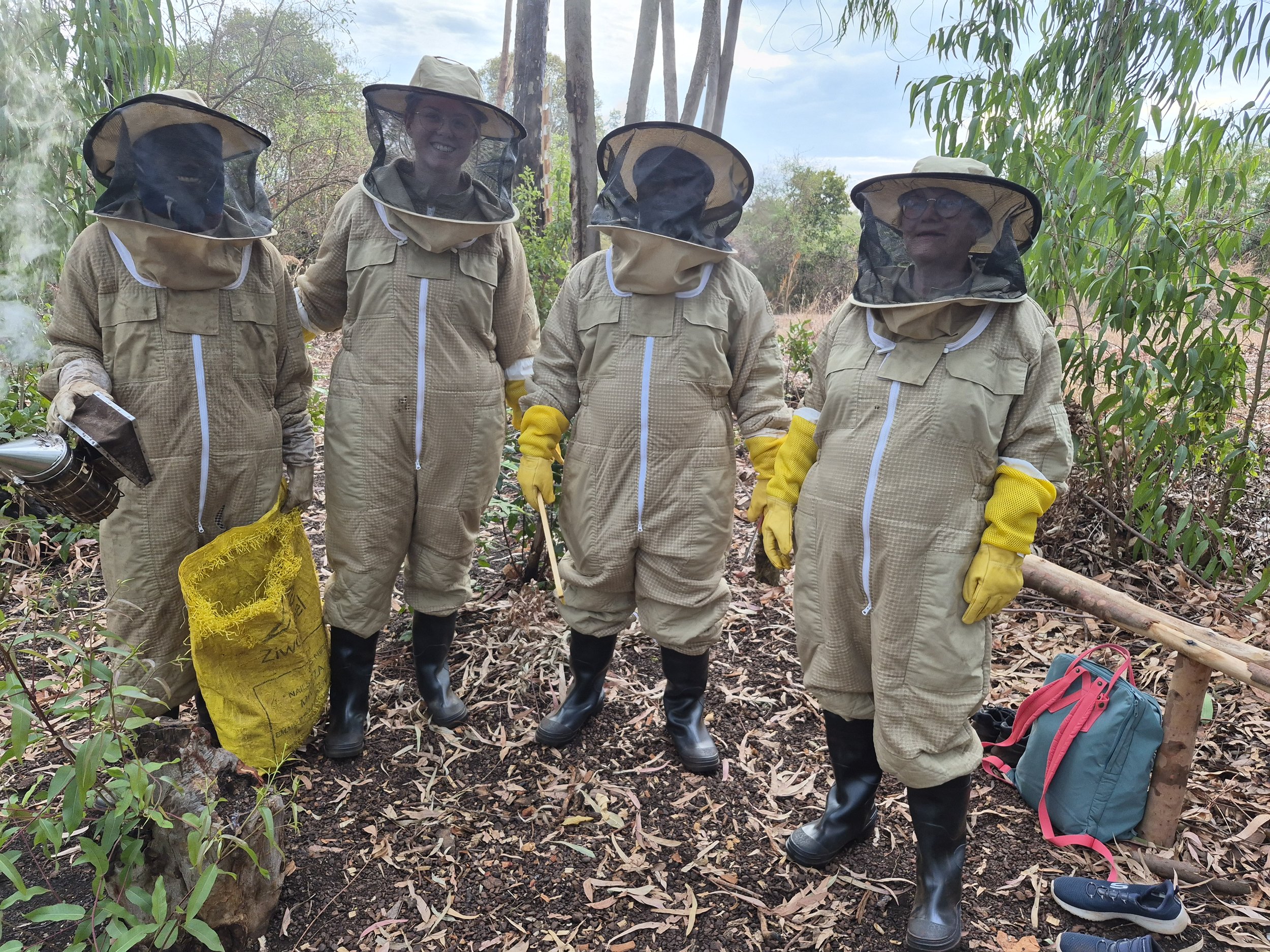
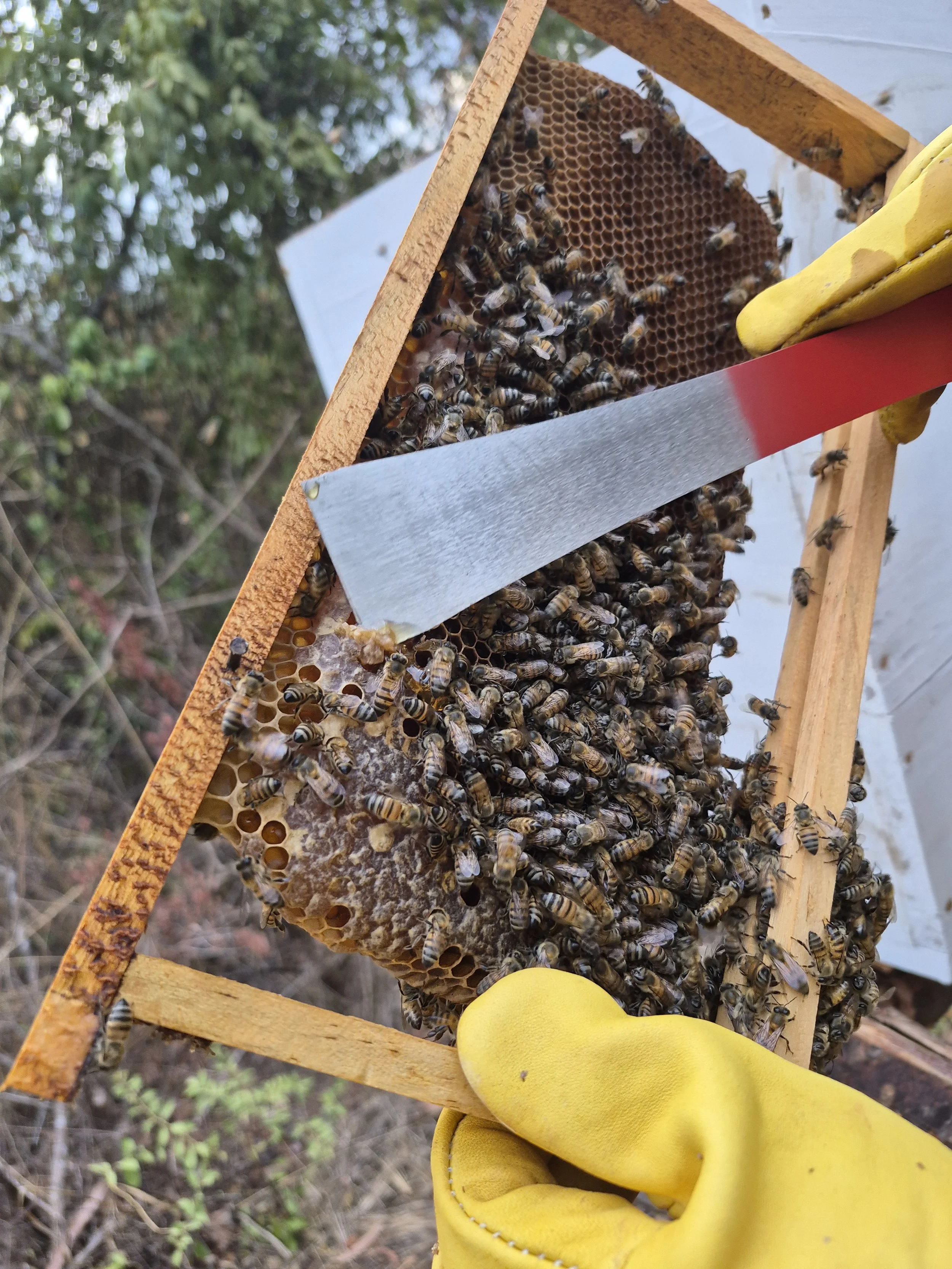
The journey began at the Mavuno demonstration apiary in Ihanda, where project coordinator Zakayo Grayson and focal farmer Theodory Mbasila introduced the team to the work taking place at the site and the practical aspects of beekeeping.
At Mavuno’s carpentry workshop, the carpenter Waziri Kazinja and his apprentices are building modern beehives for distribution to participating beekeeping groups. New machinery and plans to train additional carpenters from nearby communities aim to strengthen production capacity while developing skills and keeping knowledge within the region.
Throughout the trip, the team travelled across the project areas, meeting beekeeping groups, district officials and local farmers. These conversations offered valuable insight into the different traditions, conditions and opportunities that shape beekeeping in each region.
– Meeting the people behind the work and listening to their experiences adds a much deeper understanding of the local context. It reminds us of the importance of listening, learning and being open to perspectives that may be very different from our own, says Maja Väpnare, Head of Communications and International Project Coordinator at EWB-SWE.
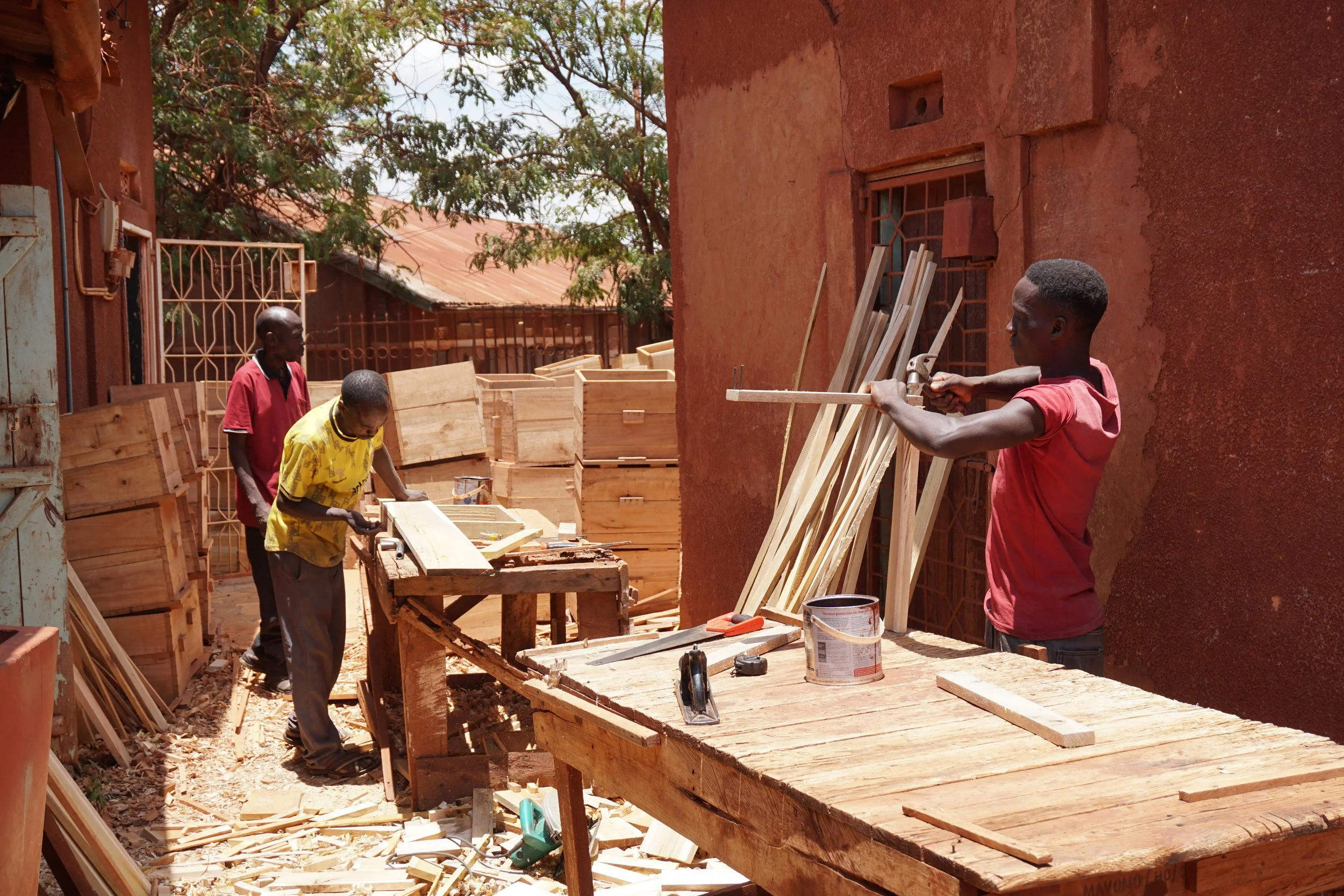
young men from the villages around ihanda are given job opportunities when building the modern Hives for the project, while being supervised by a senior carpenter.
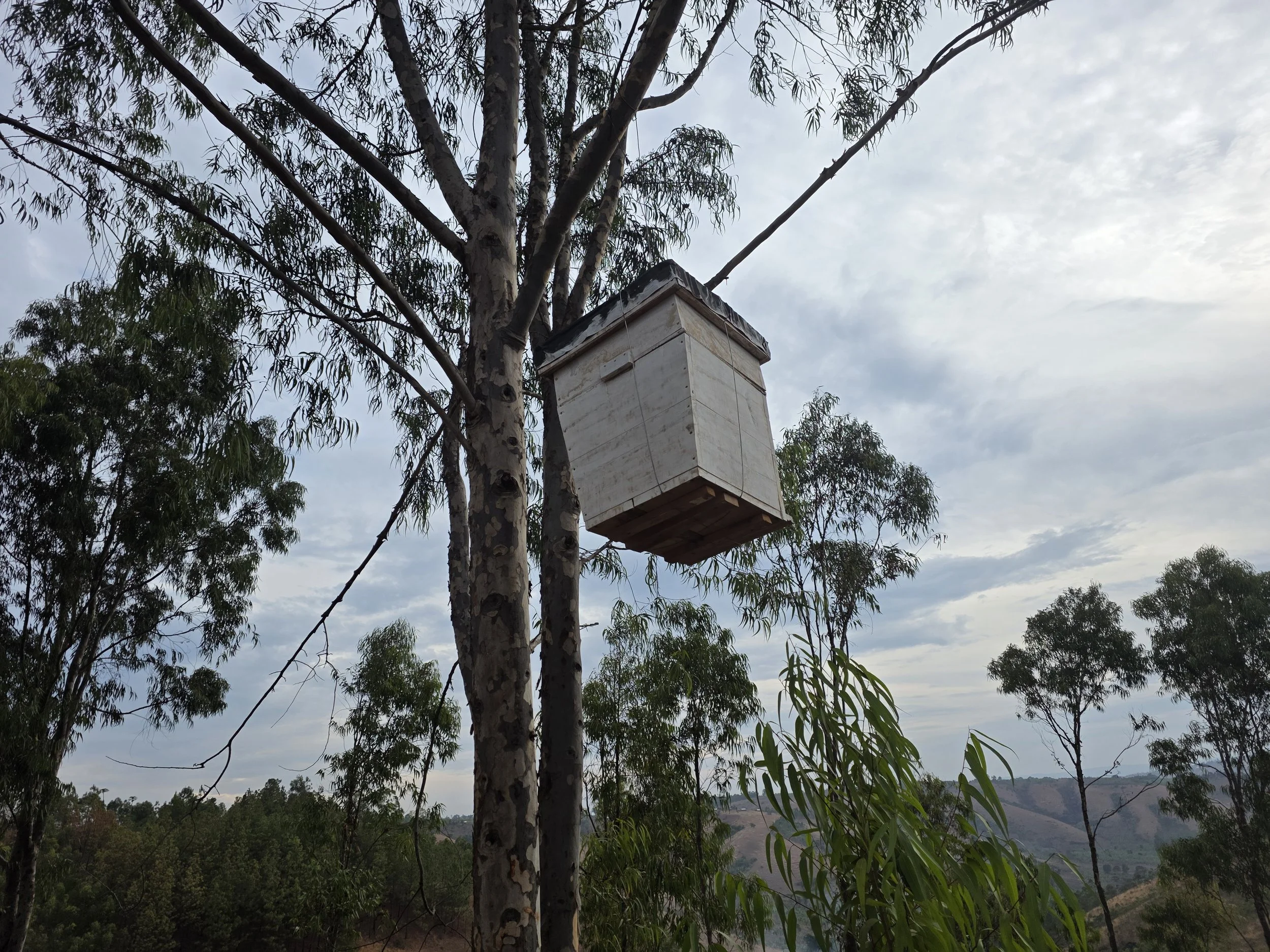
In mavuno’s demo apiary, the hives are both hung in trees and put on racks closer to the ground, allowing easy access for the beekeepers.
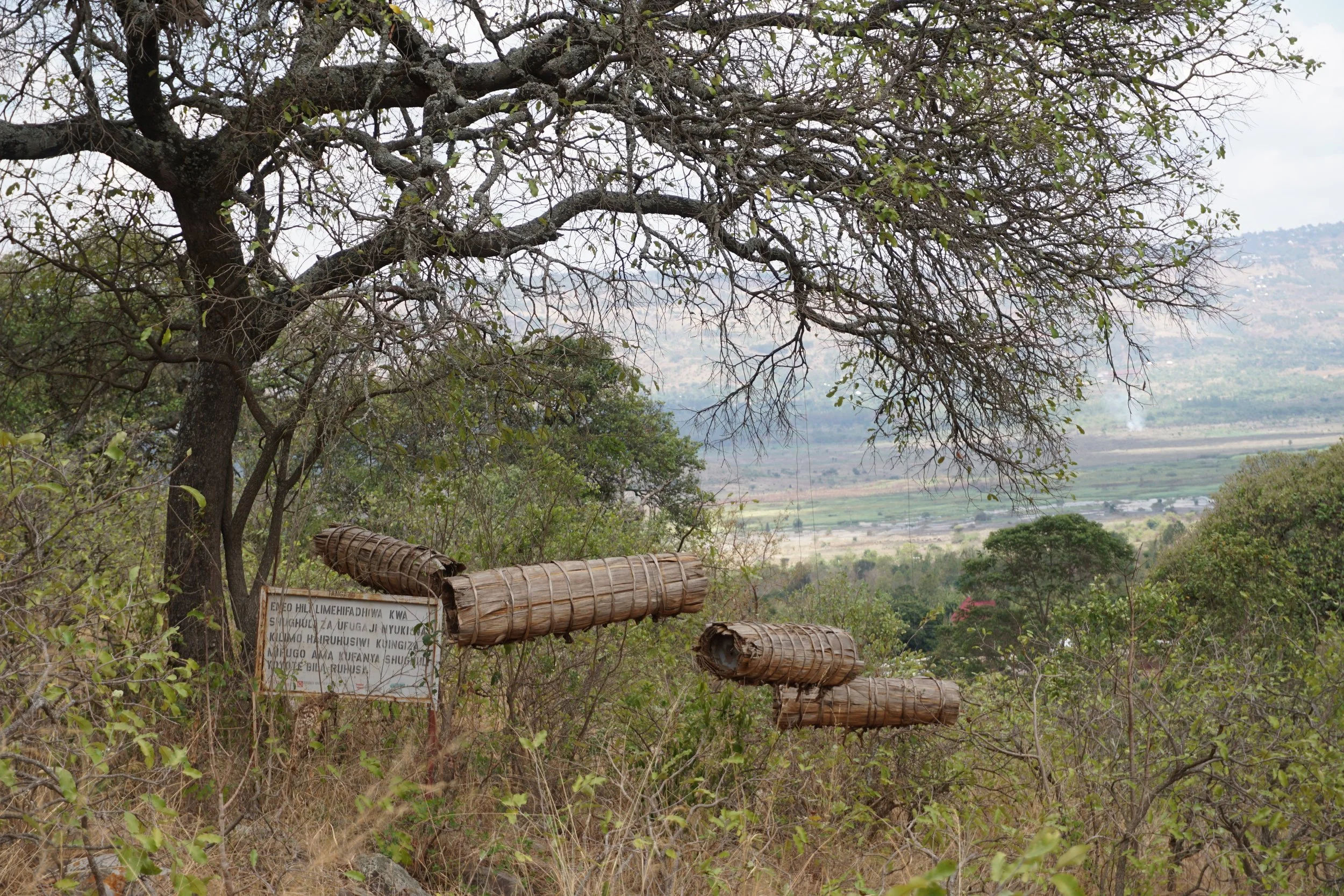
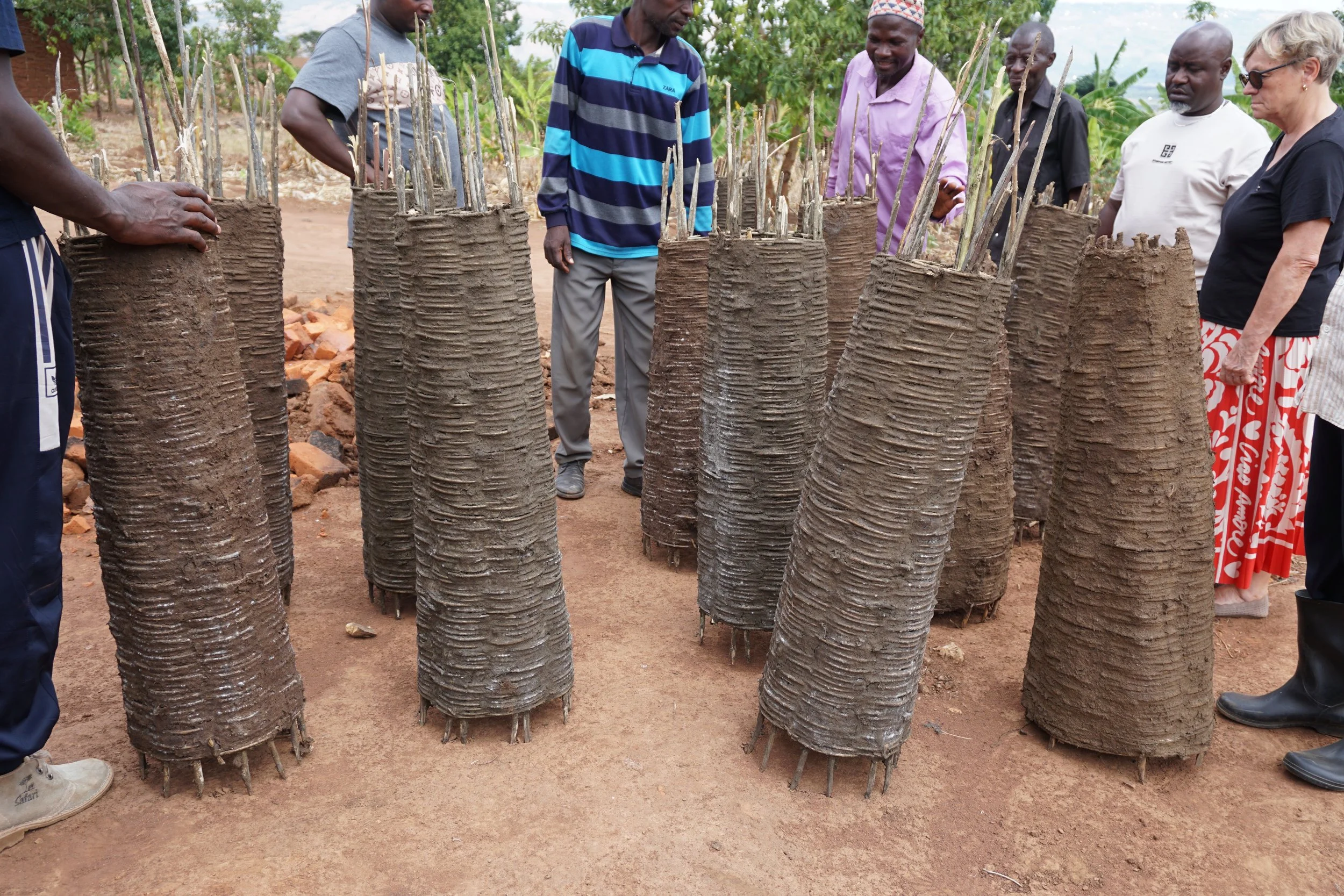
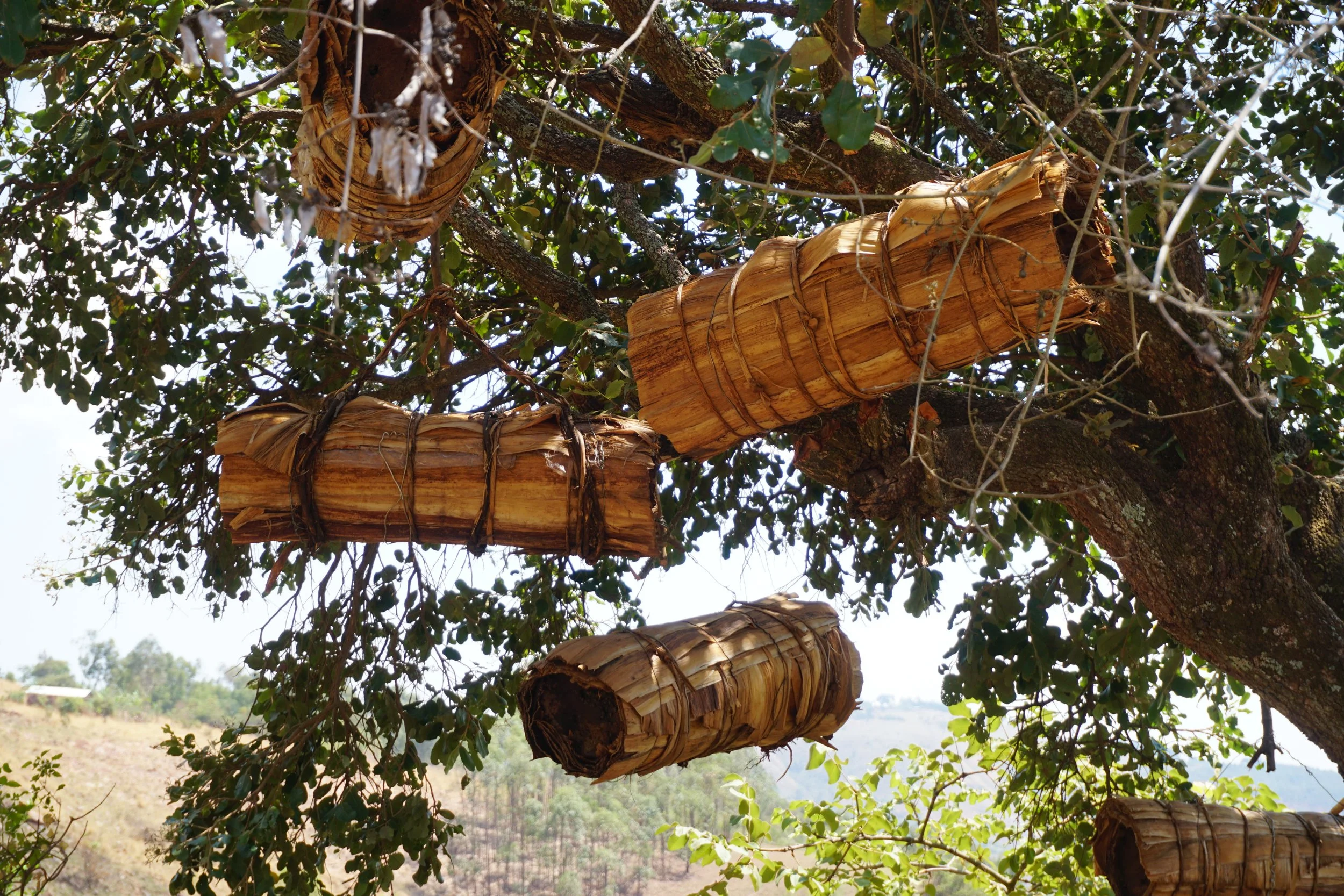
Traditional hives in the kagera region.
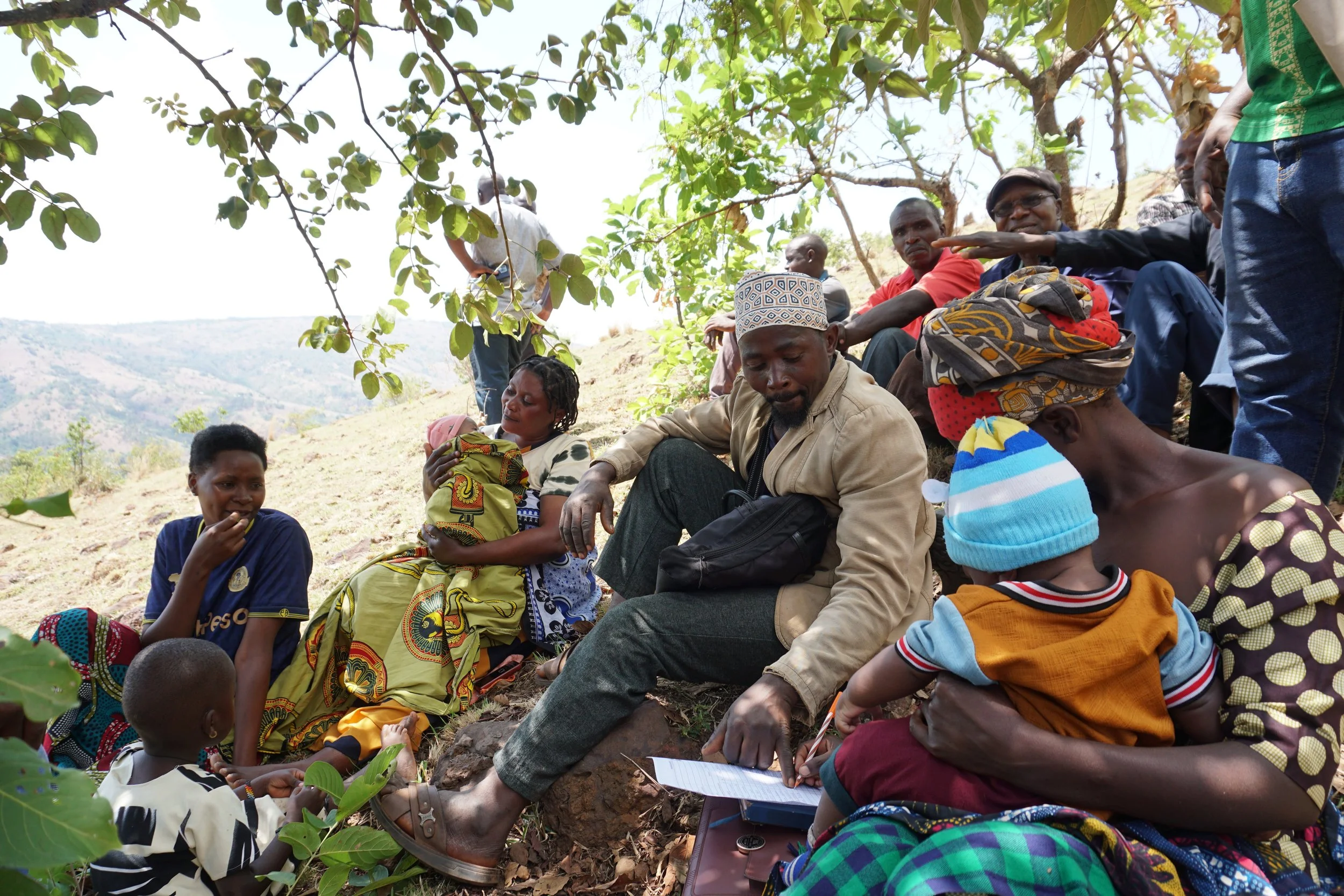
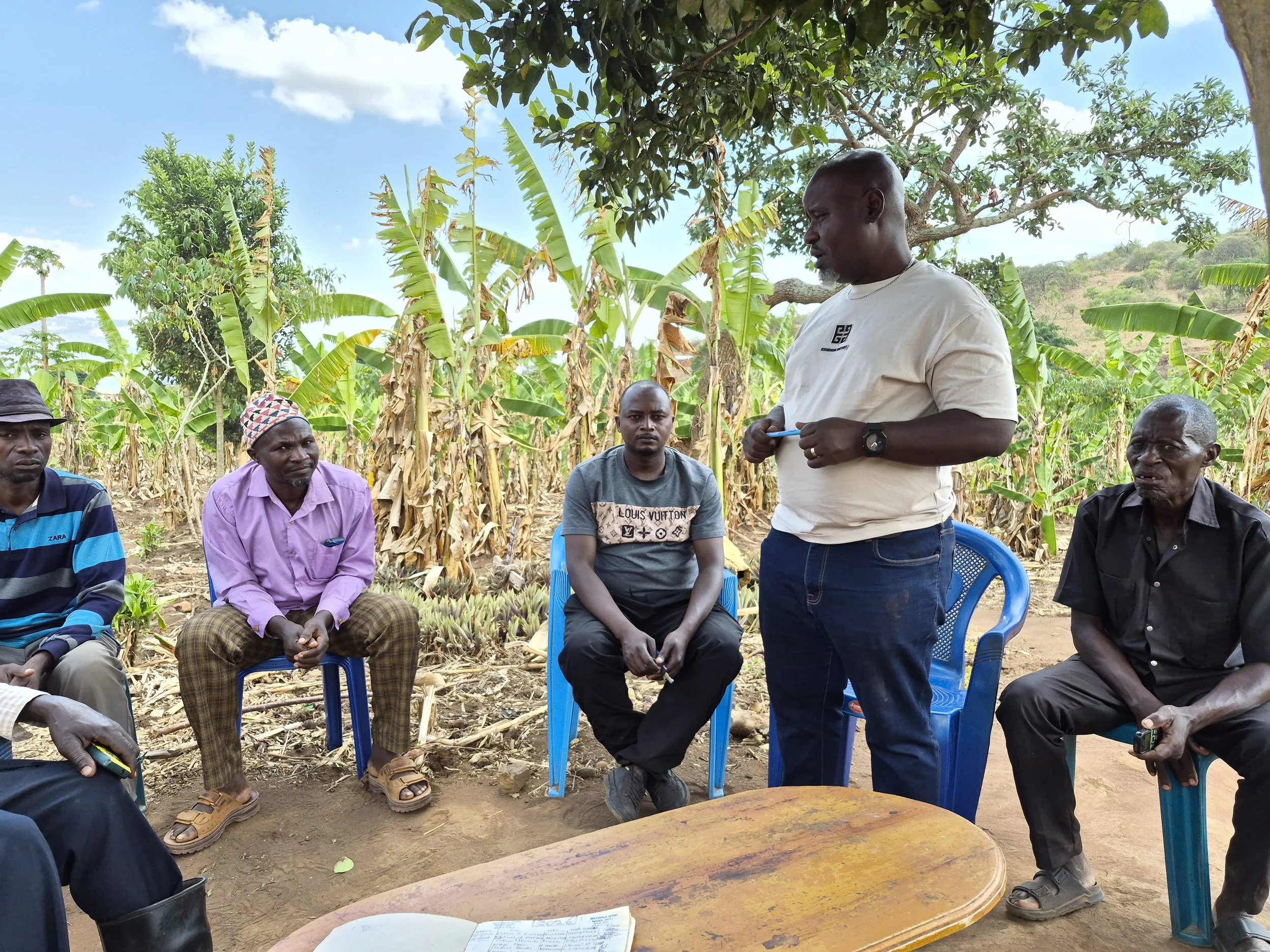
a beekeeping group gathered in the cooling shadows of bushes on the sunny hillside of bisheshe, karagwe.
Different traditions, shared opportunities
Although the project areas share an interest in developing sustainable beekeeping, the local conditions and practices differ considerably.
In Kagera, beekeeping is generally integrated into everyday farming and household activities. Traditional hives, often made from cow dung and wood, are commonly placed in trees and bushes closer to farms and homes.
In Tabora, beekeeping has a long-standing connection to local livelihoods, travel and trade. However, traditional hives are often located deep in forests and high up in trees, sometimes far from where beekeepers live. Harvesting can involve long journeys, climbing trees and navigating areas where access is made more difficult by the presence of dangerous wildlife.
These differences also influence how people participate in beekeeping and who has access to its economic opportunities.
– Seeing how beekeeping is practised in different ways across the project areas was particularly interesting. The conditions, traditions and challenges vary, which means there is no one-size-fits-all approach. The project needs to build on what already works locally while creating opportunities to develop new practices, says Susanne Hurtig, Head of International Operations at EWB-SWE.
Gender equality is another important aspect of the project. In both regions, men traditionally dominate hive ownership, forest access and honey harvesting. Women, meanwhile, are more commonly involved in processing and local sales, with fewer opportunities to participate in other parts of the value chain.
The project therefore places particular emphasis on encouraging women's participation, strengthening their opportunities to develop beekeeping skills and helping to address inequalities in access to resources and income.
Beekeeping and the importance of healthy ecosystems
The connection between beekeeping and environmental protection was another recurring theme throughout the visit. Bees depend on healthy ecosystems and flowering vegetation to thrive. In turn, sustainable management of forests, trees and agricultural landscapes helps preserve the natural resources that beekeeping relies on.
Supporting beekeeping can also create incentives for communities to protect their surrounding environment. As part of the beekeeping project, Mavuno involves students in tree planting activities at schools, to preserve and restore the environment in the villages.
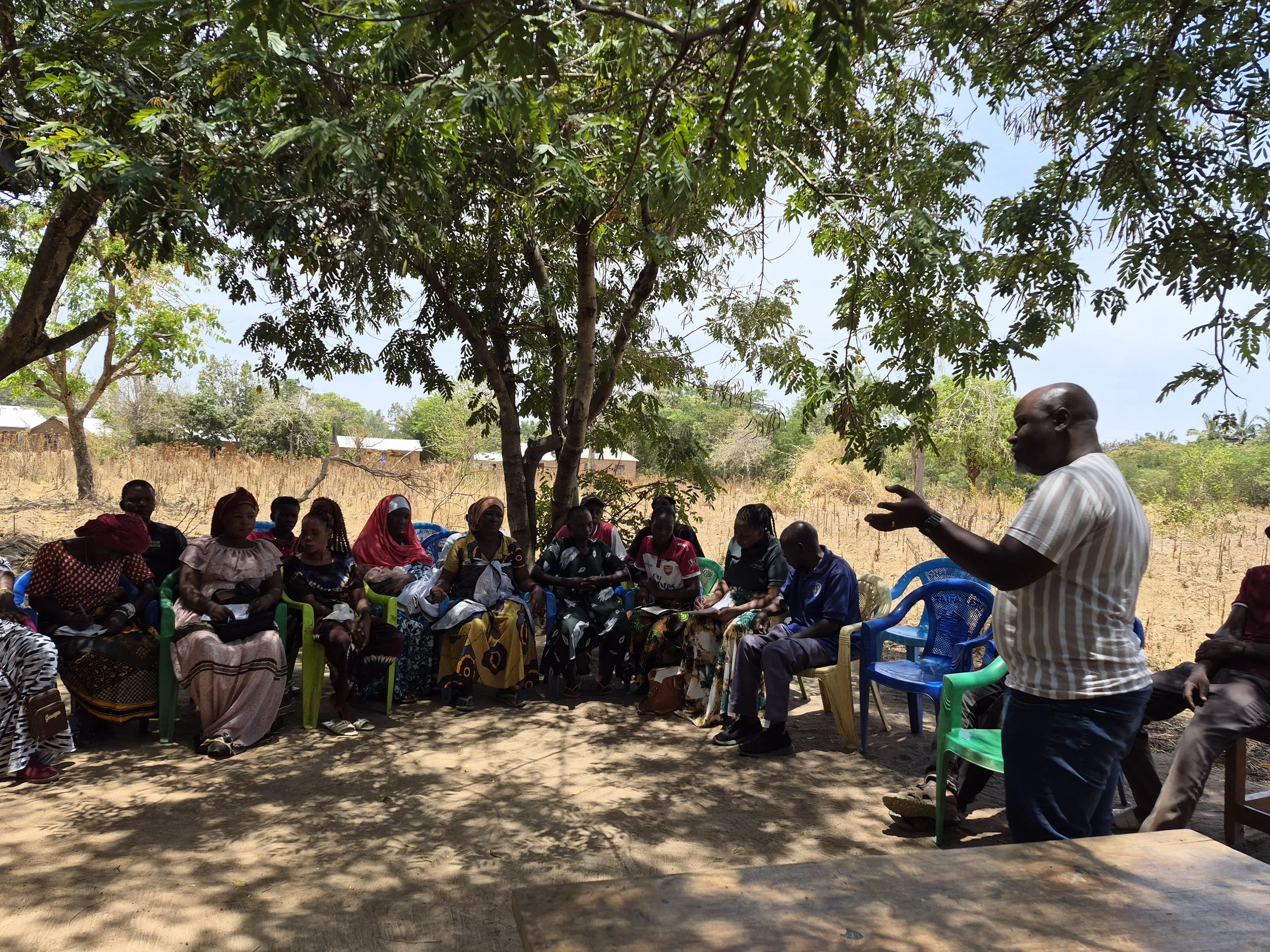
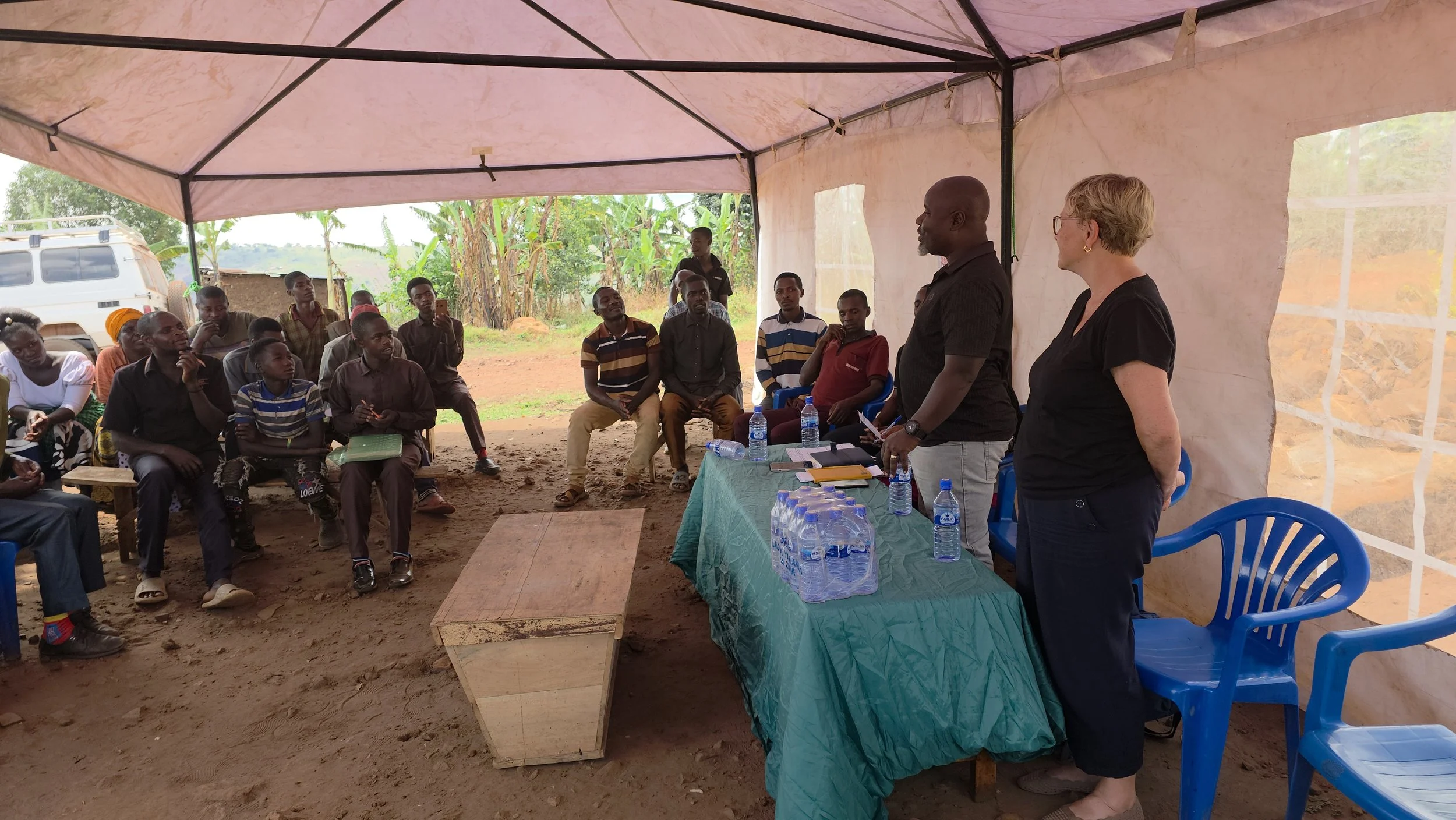
a beekeeping meeting in urambo, tabora region.
During a meeting in Urambo, one beekeepers' group shared a call-and-response chant that captured this relationship:
“Nyuki wanauma” – Bees sting.
“Nyuki hawaii” – Bees do not sting.
“Nyuki ni mali sana – acha shoka tundika mzinga” – Bees are a valuable asset; put down the axe and hang a hive.
The message was simple but powerful: bees are a valuable resource, and protecting the environment can also support local livelihoods.
Connecting local production to wider opportunities
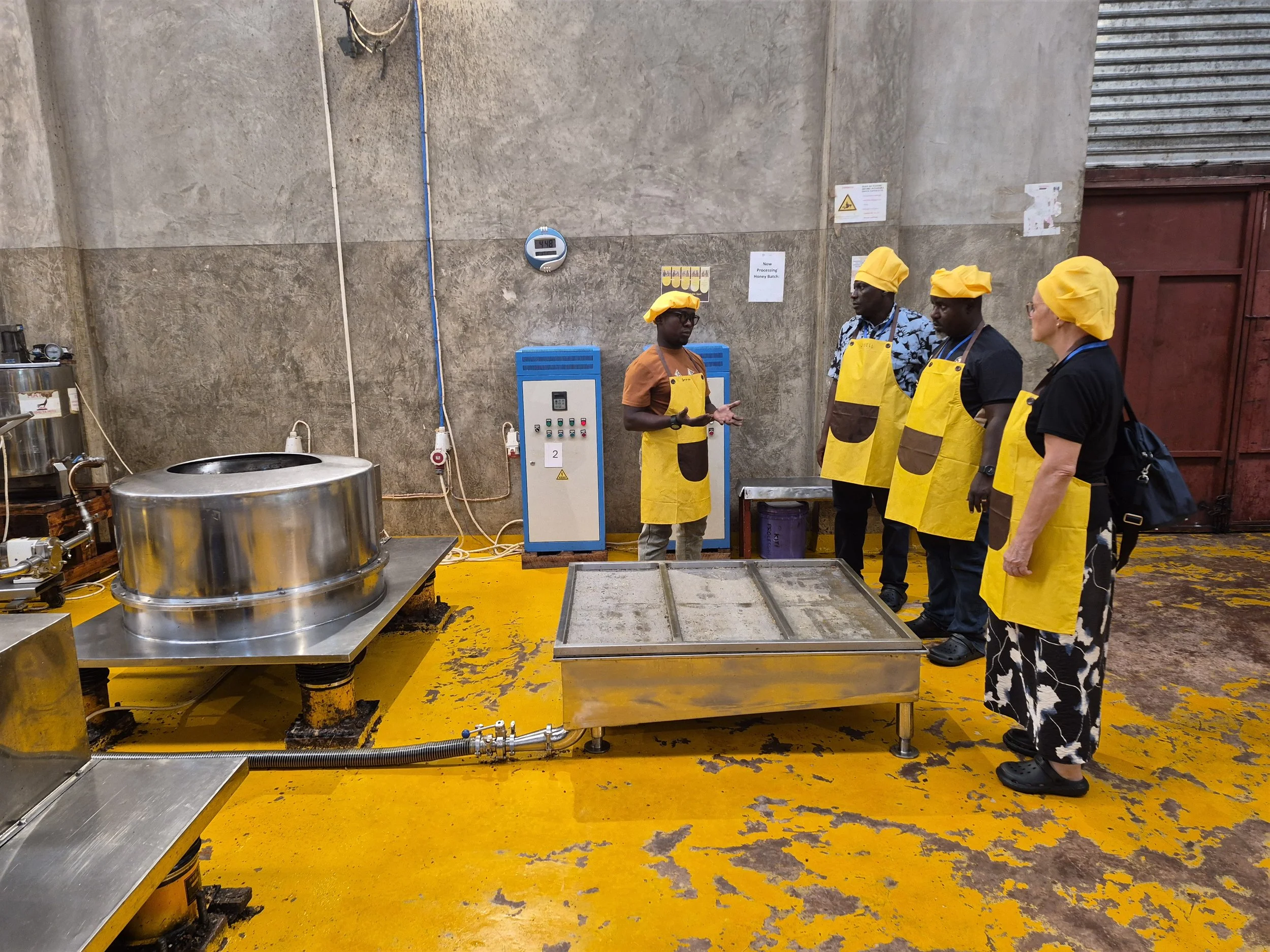
The final stop on the trip was the Upendo Honey factory in Kigoma, where the team learned about local honey processing and production methods.
The visit provided another perspective on the value chain and the opportunities that arise when local beekeeping connects to processing facilities and wider markets.
For farmers, increasing honey production is only one part of the picture. Access to suitable processing facilities, quality control and reliable markets can be equally important in creating sustainable livelihoods and ensuring that more value stays within local communities.
These areas will be central to the next phase of the Durable Beekeeping Project, alongside continued efforts to engage more farmers and strengthen local capacity.
The visit highlighted both the opportunities and the considerations involved in developing sustainable beekeeping across different local contexts. By combining local knowledge, practical skills and collaboration with district authorities and communities, the project aims to build on existing practices while exploring new opportunities throughout the honey value chain.
We would like to thank our partners at Mavuno Project, the beekeeping groups, local authorities and everyone who generously shared their knowledge, experiences and time with us during the visit.
See more photos from the project visit
Learn more about the project

Durable Beekeeping for Sustainable Livelihoods
Bees are vital to our survival, as primary pollinators for a third of the food we eat. In Tanzania, modern beekeeping techniques are introduced to improve honey production, empower small-scale farmers and ensure sustainable livelihoods together with Mavuno Project.
Beekeeping project takes flight in Tanzania
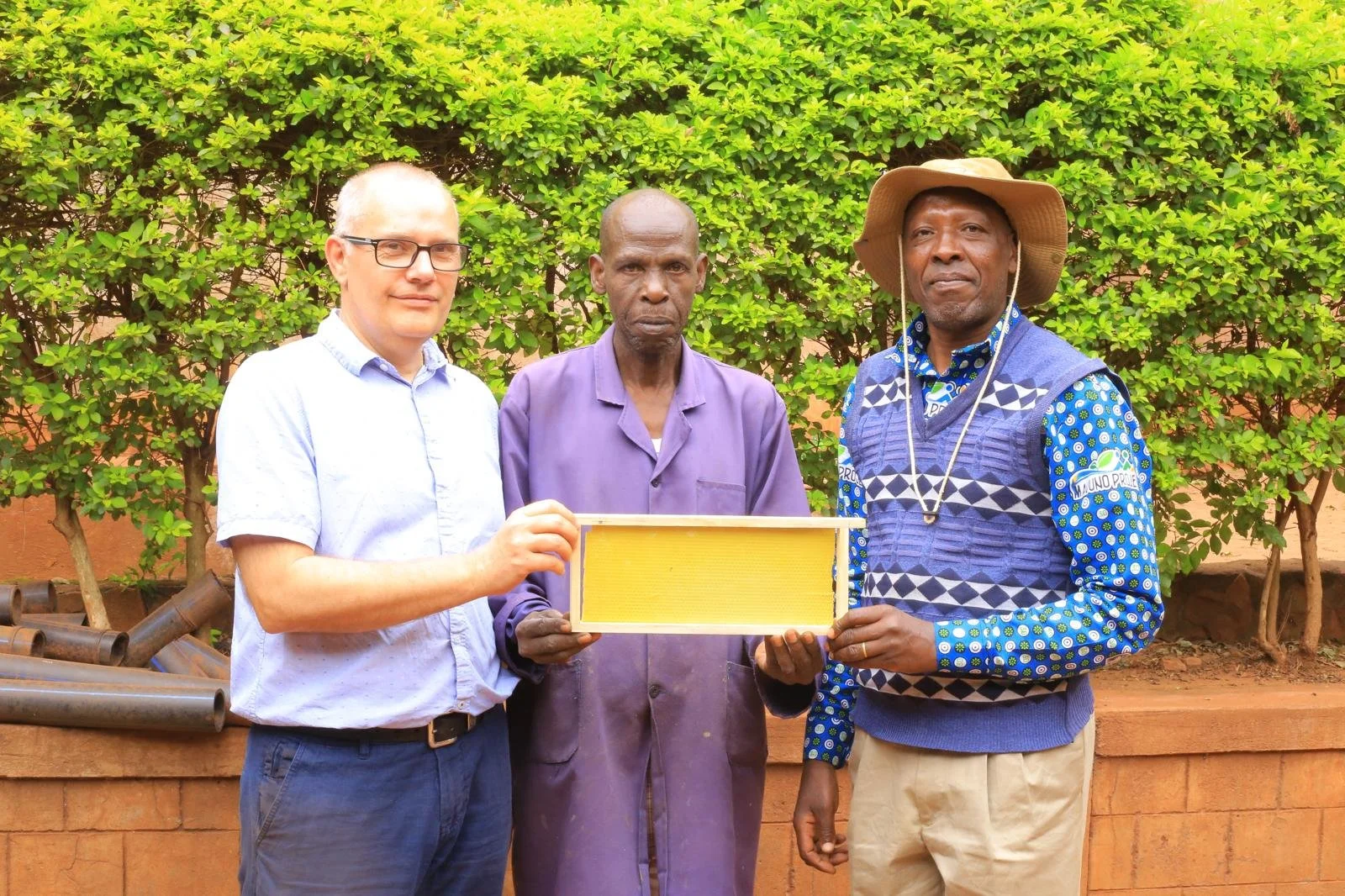
In January 2026, EWB-SWE volunteer Martin Bennrup went to Karagwe to work on site together with Clara Bitakwate, Project Manager at Mavuno Projects, testing new equipment and training local beekeepers.