
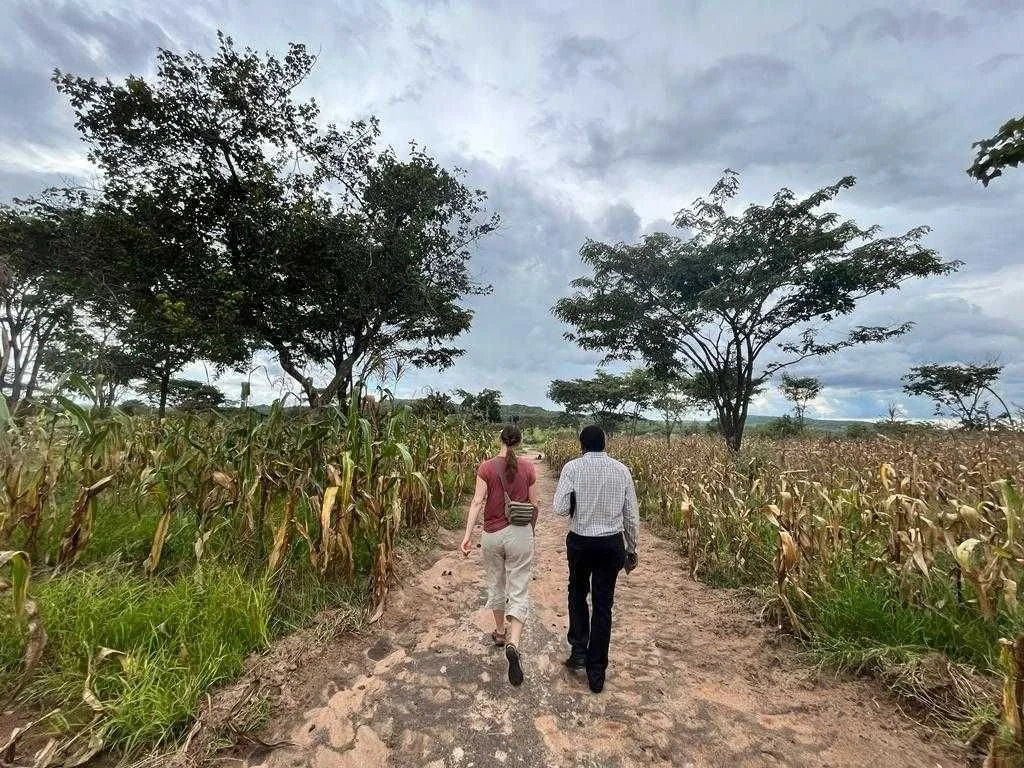
Collaboration in Practice – Kajsa and Kalle Reflect on Working with Build Up Nepal
/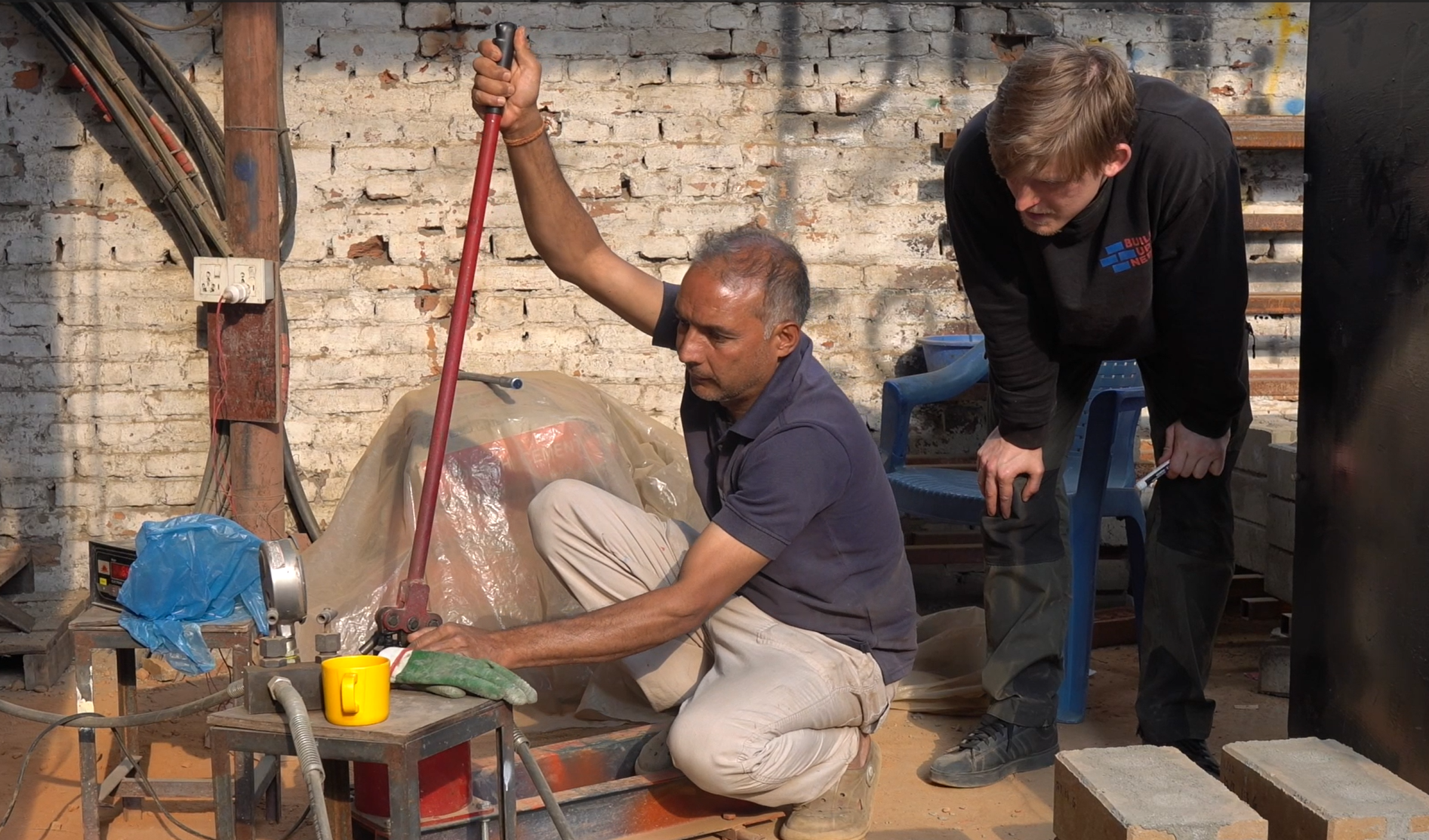
Testing in the workshop. Photo: Kalle Edström and Kajsa Lilja
In the mountain villages of Nepal, the need for safer, higher-quality housing remains a pressing challenge. Despite ongoing efforts to strengthen resilience, much work remains to ensure that communities have access to durable and affordable homes.
Together with our local partner Build Up Nepal, we support rural entrepreneurs and communities to build safer housing while creating local livelihoods.
This spring, engineering students Kajsa Lilja and Kalle Edström from Chalmers University of Technology joined Build Up Nepal as part of their Master's thesis project. The project was proposed by Engineers Without Borders Sweden and Build Up Nepal, and funded through the Global Mentorship Program (GMP) at Chalmers.
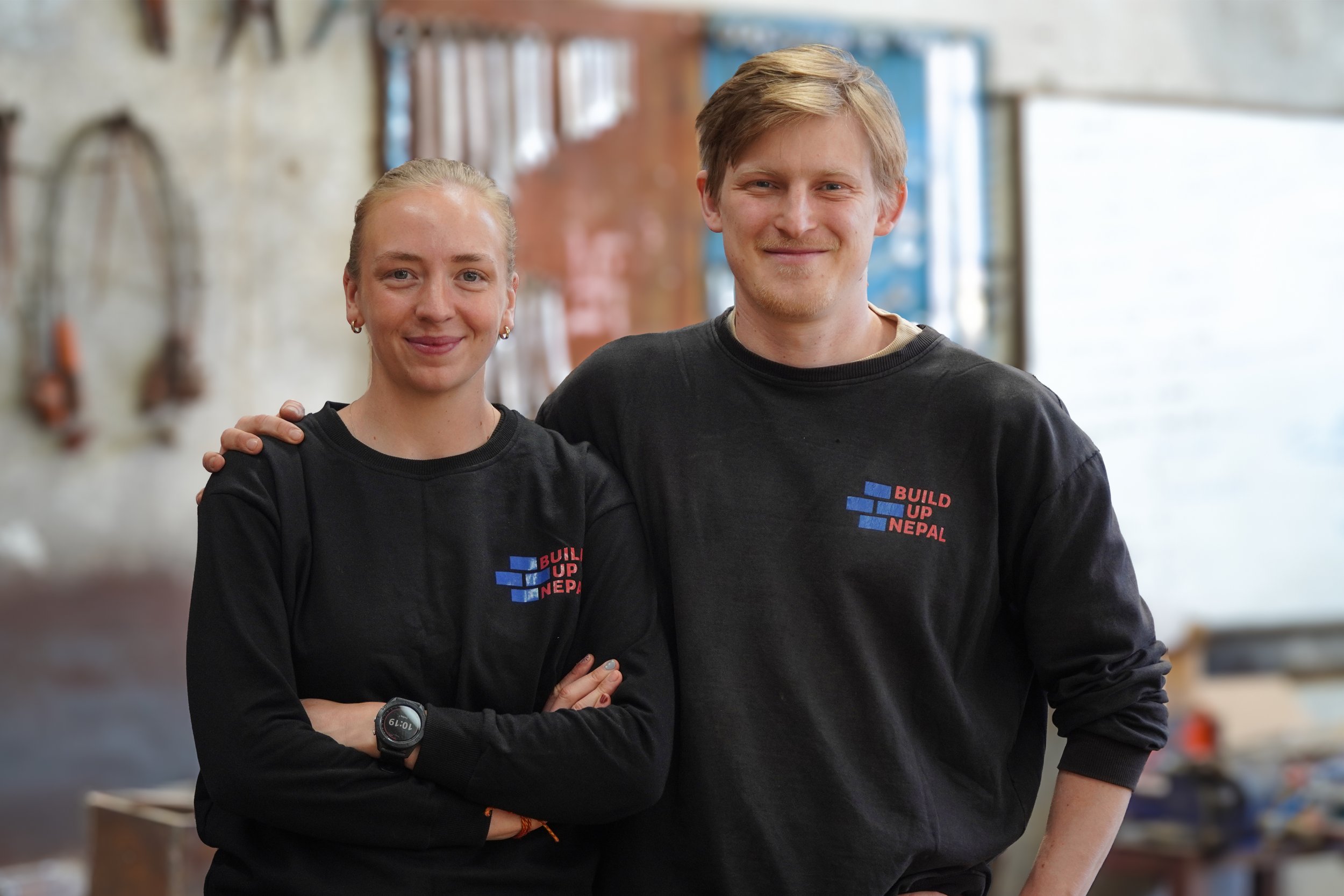
Kajsa lilja and Kalle edström.
A Day in the Workshop
For Kajsa and Kalle, daily life quickly became a blend of hands-on experimentation and collaboration. Each morning began with a twenty-minute walk to Build Up Nepal's office, where they joined a team of around fifteen colleagues.
The day often started in the workshop, discussing plans with mechanics before preparing materials and organising test schedules. At 10 a.m., the entire office gathered for tea, a daily tradition that brought the team together.
Working closely with the local team, Kajsa and Kalle contributed to strengthen material testing and expand knowledge that can support future innovation. Most of their time was spent on the workshop floor, preparing materials and carrying out a series of rigorous tests.
— The collaboration with Build Up Nepal worked wonderfully well. Everyone was eager to move the work forward and always ready to help, Kalle says.
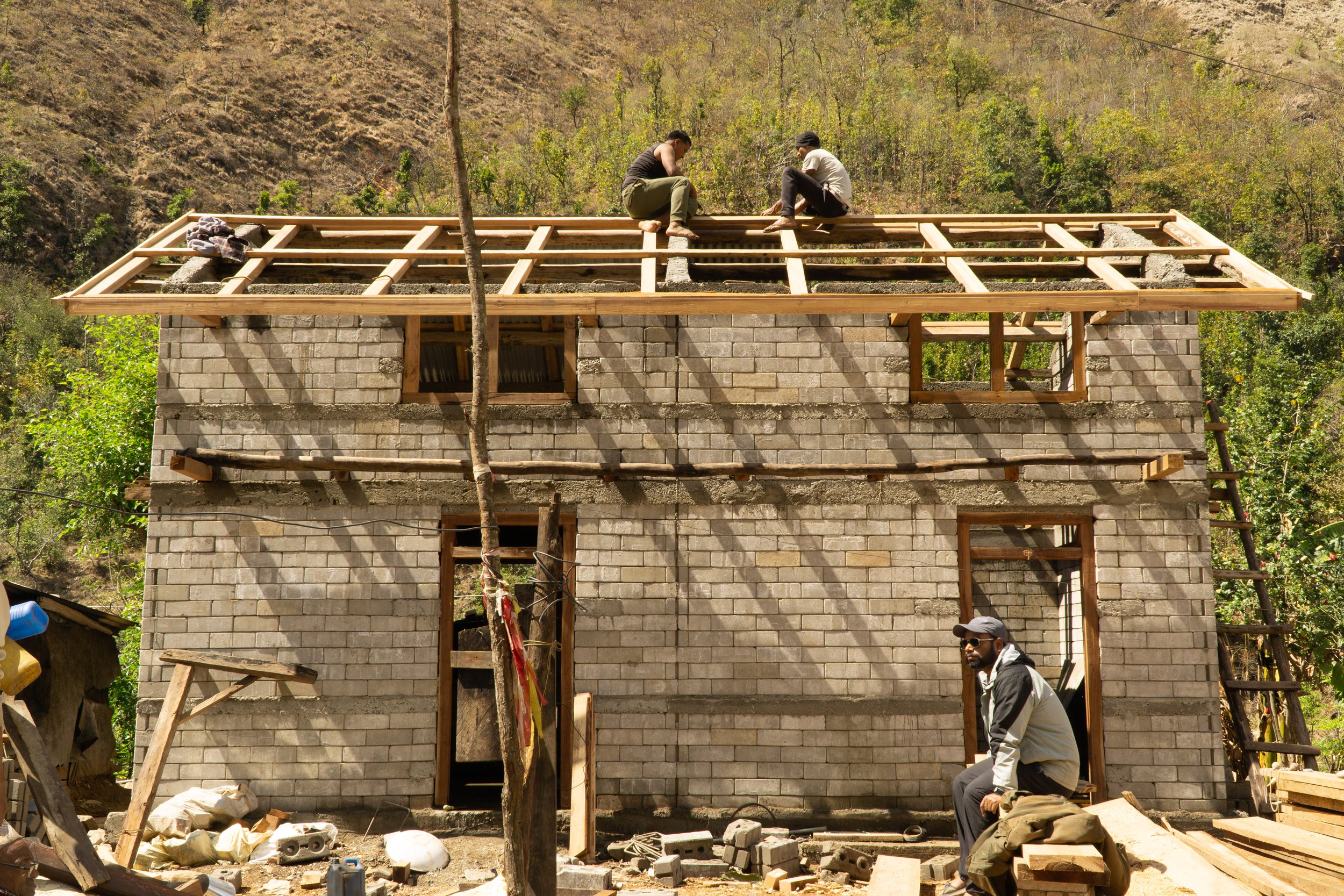
Interlocking bricks is used to build earthquake resilient homes in nepal. Photo: Kalle Edström.
The Importance of a Flexible Approach
Fieldwork in a new environment is rarely a straight line. One of the project’s biggest challenges was time. Manufacturing and preparing the materials took significantly longer than anticipated, leaving limited room for testing.
— Since we needed to adapt the methods to the local environment, and it was the first time we had done something like this, it was difficult to anticipate all the potential obstacles and make the right decisions from the start, Kalle recalls.
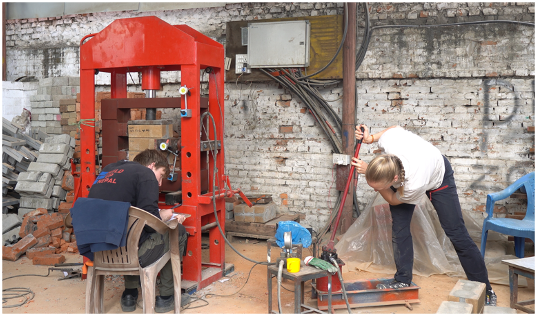
Experimentation in the workshop. Photo: Kajsa Lilja
The experience highlighted the value of adaptability when working in new environments and developing methods that must function under real-world conditions.
— The most important lesson was learning when to stay calm and keep moving forward despite unforeseen events, and when to actually stop, take a step back, and rethink the approach, says Kajsa.
Despite these challenges, the team successfully adapted their methods and established a reliable framework for material testing that Build Up Nepal can continue to build upon. Kajsa and Kalle also helped develop a database of results that can serve as a valuable resource in the projects ahead.
Building Knowledge for the Future
The most significant outcome of the project was the foundation it created for future work. However, engineering solutions only work if the local community owns and understands them.
While technical work formed the core of the project, meaningful collaboration depended on the support of colleagues who bridged language barriers and helped connect the research with local realities. The strong interest among local residents in building safer homes provided a constant source of motivation and reinforced the importance of the work being carried out.
A Warm Memory Outside Fieldwork
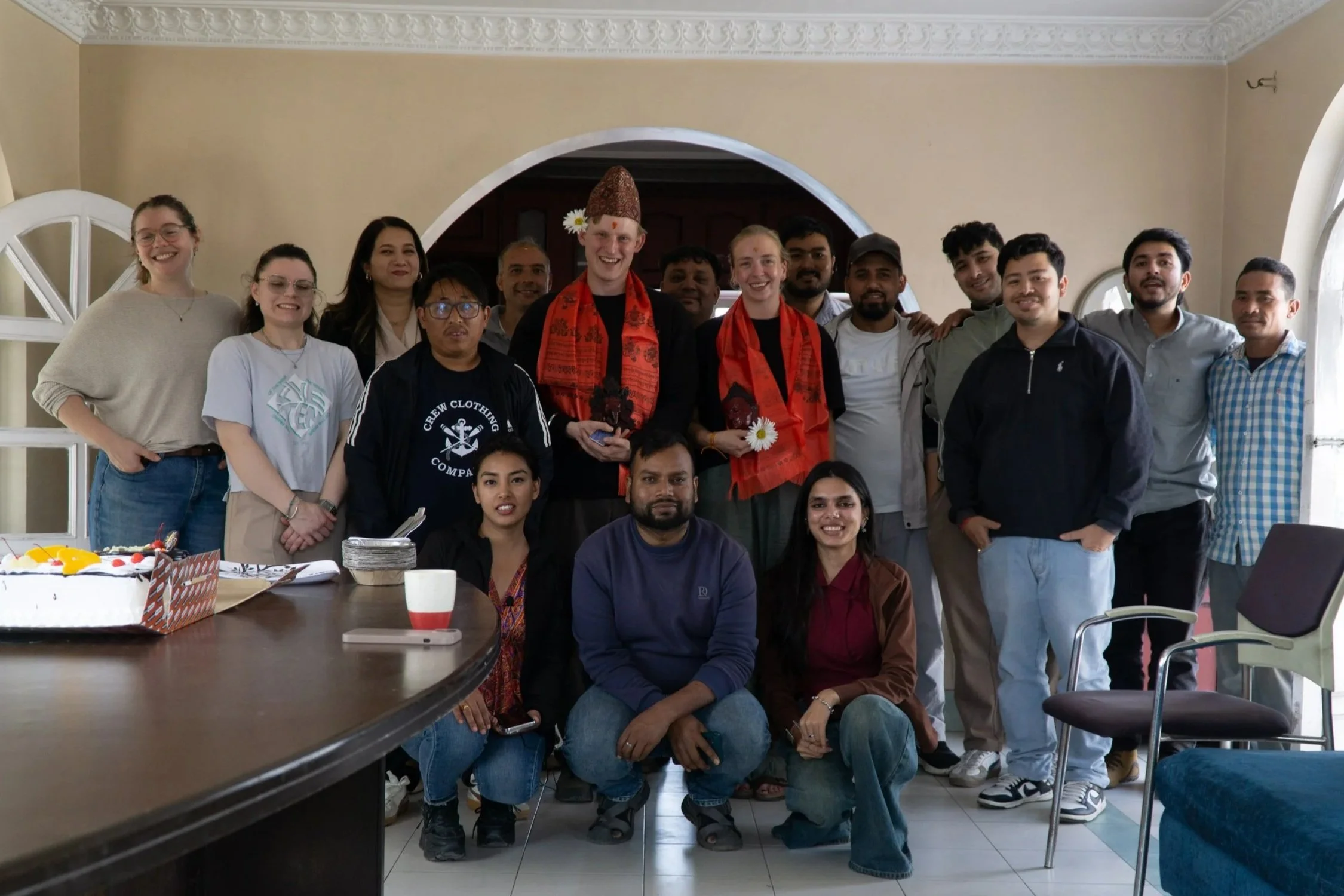
farewell dinner with the staff at build up nepal. Photo: Kalle EdStröm
When reflecting on their time in Nepal, Kajsa and Kalle recall the unforgettable warmth of the Nepalese community. During their final week, the team at Build Up Nepal organized a farewell dinner with the entire office, celebrating the collaboration and shared work.
— The people we have met are incredibly open and welcoming, and we have had so much fun together. That warmth and camaraderie is something we will truly remember, Kajsa says.
As Kajsa and Kalle return to Sweden to finalize their thesis, their work leaves behind practical tools and knowledge that Build Up Nepal can continue to develop. More importantly, it demonstrates how collaboration across borders can strengthen local innovation and contribute to long-term efforts to make safe, resilient housing a reality for more communities across Nepal.
Watch Kajsa and Kalle’s presentation video from Nepal
Related content
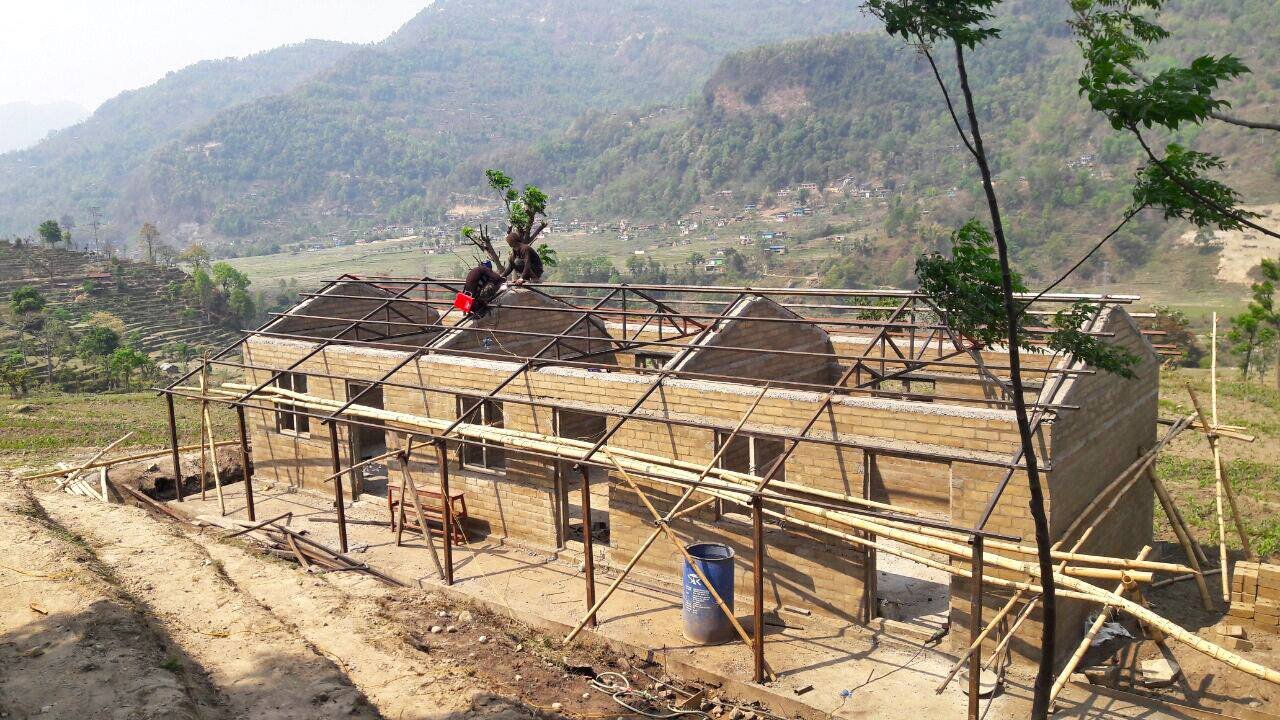
Building resilient communities in Nepal - a collaboration with Build Up Nepal since 2016
Together with Build Up Nepal, we work to empower rural entrepreneurs and communities to build safe, affordable homes and resilient incomes in Nepal.

Thesis proposals
Do you want to write your thesis with EWB-SWE and contribute to real change? We welcome students to make studies related to our projects. On this page, we list current openings.