
Mark your calendars! On 13 May at 18:00, we are hosting our Missing Maps Mapathon, where you can help put vulnerable communities on the map!
Why join?
Read more about the impact of last mapathon in November.
LINK TO SIGN-UP PAGE
Welcome to EWB-SWE Annual Meeting & Members’ Day 2025
/
This year’s Annual Meeting & Members’ Day will be held April 26-27 2025. Engineers Without Borders Sweden is pleased to welcome all members to our Annual Meeting & Members’ Day 2025 on April 26-27. The event is open to all EWB-SWE members. The Annual Meeting is a great chance to make your voice heard and influence EWB-SWE´s future by submitting a motion and voting on issues raised during the meeting. During these two days, you will also have the opportunity to learn more about ongoing projects and programs, as well as recent developments.
Members’ Day
Starting: April 26 at 11:00.
Ending: April 27 by 13:00.
Venue: Urban Garden Zinkensdamm Hotel & Hostel, Zinkens Väg 20, Södermalm, Stockholm.
Programme: Please see the programme for the Members’ Day further down on this page >>
Annual Meeting
Date: April 26
Time: 13:00-14:30
Venue: Urban Garden Zinkensdamm Hotel & Hostel, Zinkens Väg 20, Södermalm, Stockholm.
Online participation: Yes, please sign up here below.
Members’ Day Programme
Saturday April 26, 2025
11:00 Registration and check-in, from 11:00
12:00 Welcome lunch, at Zinkensdamm Urban Garden (1 h)
13:00 Annual Meeting, (1.5 h)
Please see the agenda here!
It is possible to follow the meeting online through this link.
Please note the following deadlines: Proposals to be presented at the Annual Meeting is April 10th, 2025. Nominations for candidates for the EWB-SWE Board is open until March 31st. The election committee can be reached by email to election.committee@ewb-swe.org
14.30 Afternoon fika (0.5 h)
15:00 Afternoon session (3 h)*
Update from our Secretariat
Launch of our new National Professional Group
Presentations from our Local Student Groups: Chalmers, Lund, Luleå, KTH, Linköping , Uppsala
Short brake
Presentations from our Competence Groups: Construction; Digitalization; Energy & Waste; Sustainable Food; WASH, Partnership Assessment; Monitoring, Evaluation & Learning (MEL).
18:00 Closing remarks. Free time (1 h)
19:00 Mingle (1 h)
20:00 Dinner, at self cost price
Sunday April 27, 2025
8:00-10:00 Breakfast is served at the Urban Garden Zinkensdamm Hostel Breakfast Room
Check out
Free time
10:00 Morning session and workshops (3 h)
Workshops with our Competence Groups, Local Student Groups and the Board on:
Thoughts and ideas from the presentations yesterday
Ideas on how to strengthen cooperation within the organisation
13:00 End of EWB-SWE two-day Annual Meeting and workshops
Booking of accommodation
In order to book accommodation please e-mail our booking contact Yvonne at yvonne@zinkensdamm.com
Please mention that you are participating in EWB-SWE event on April 26-27, and state if you are part of a "Local group" or a "Competence Group."
Rooms with shared shower and WC (in the corridor), for 2-4 persons/per room: 450 SEK (per person)
Rooms with with shower and WC, for 1-2 per person: 790 SEK (per person) (for single rooms there might be an additional fee).
Please note that you need to bring your own sheets, but it is possible to rent from the hostel. Just ask when booking.
Deadlines for booking
Last day to register for the Annual Meeting & Member's Day, and for booking of accommodation, is Sunday, 23rd of March.
If you are unable to meet that deadline, but wish to sign-up for the meeting, please email communication@ewb-swe.org
Sign-up here!
Sessions: Please sign up for attendance for both the Annual Meting session and the Dinner session on Saturday, and for the Workshop session on Sunday. In case you cannot participate in all sessions, please only select the sessions where you will be able to participate.
It is also possible to attend the Annual Meeting online. Please sign upp with the link to the right.
Attend the Annual Meeting online
Attend one or both days in Stockholm
Celebrating World Engineering Day 2025: Building a Sustainable Future Through Engineering
/
Today, March 4, 2025, we join the global community in celebrating World Engineering Day for Sustainable Development. This annual event, established by UNESCO in 2019, highlights the role of engineering in achieving the United Nations' Sustainable Development Goals (SDGs). This year's theme, "Shaping Our Sustainable Future Through Engineering," focuses on how engineers contribute to a more sustainable and resilient world.
Why World Engineering Day Matters
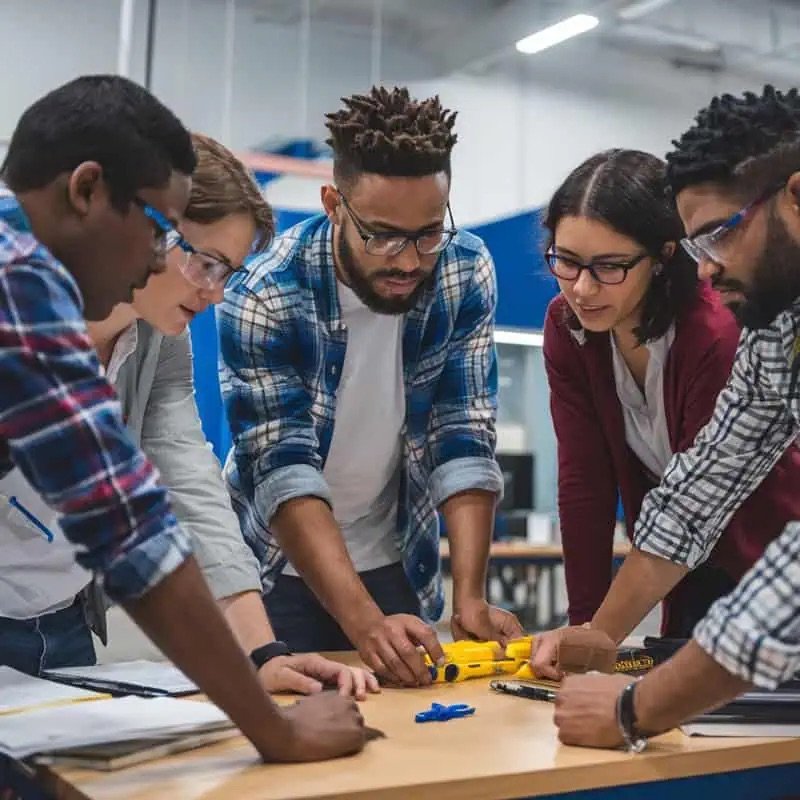
World Engineering Day is more than a celebration—it is a reminder of how engineering helps solve global challenges. From providing clean water and energy to designing disaster-resilient infrastructure, engineers play a key role in improving lives and making communities stronger.
Global Events and Activities
A range of events and initiatives are happening worldwide to mark the occasion:
UNESCO Headquarters, Paris – An official event discussing engineering's role in sustainable development, featuring experts and leaders.
Learn moreVirtual Conference & Exhibition (April 26 – May 2, 2025) – A global platform showcasing engineering innovations for sustainability through discussions, workshops, and exhibitions.
Join hereWorld Engineering Day Hackathon 2025 – Participants tackled real-world issues like climate resilience, housing infrastructure, and digital empowerment for women. The top 15 entries feature innovative solutions from across the globe.
See the finalists
How You Can Get Involved

Explore Events – Find and join events worldwide by visiting the official World Engineering Day website.
Join the Conversation – Share your thoughts on sustainable engineering using #WorldEngineeringDay on social media.
Inspire Future Engineers – Encourage young people to consider careers in engineering by sharing stories of its impact on sustainable development.
Our Commitment
At Engineers Without Borders Sweden, we are committed to using engineering to build a sustainable and fair future. Through initiatives like Engineer2Engineer, Inspire Youth, and The Reflective Engineer, we promote curiosity, equality, inclusivity, and sustainability in all our work.
This World Engineering Day, let’s celebrate the achievements of engineers everywhere and continue working towards a more sustainable world.
📌 For more information on World Engineering Day events, visit worldengineeringday.net.
Learn more here
Enjoy and be inspired by this year’s winners of the WED Hackathon
Great video from WED 2023
Breaking Barriers: Advancing Menstrual Health and Hygiene in Kyerwa, Tanzania
/
Rachel Stephen, Project Leader at Maji Safi Group
Menstrual Health and Hygiene (MHH) remains a significant challenge in many communities, where stigma and lack of education contribute to poor health outcomes and school absenteeism for girls. In December 2024, Maji Safi Group, in collaboration with Mavuno Project, organised a training session in Kyerwa District, Tanzania, to equip educators, local leaders, and students with the knowledge and skills needed to promote menstrual hygiene and gender equality.
We spoke with Rachel Stephen, Project Leader at Maji Safi Group, about the impact of the training, its challenges, and the future of MHH advocacy in the region.
Empowering Communities Through Education
One of the most significant takeaways from the training was the increase in awareness around menstrual hygiene, breaking down deep-seated myths and taboos. Rachel emphasised that many participants had little prior knowledge about menstrual health, and this training provided an open and interactive space to discuss these topics without shame or stigma.
“The training didn’t just focus on facts—it helped build confidence. It showed that MHH is not just a health issue but also a gender equality issue,” Rachel explained.
The participatory nature of the sessions—using videos, images, and diagrams—helped attendees engage with the content in a meaningful way. The discussions led to a strong commitment from trainees to share what they learned within their communities, ensuring the knowledge spreads beyond the classroom.
Immediate and Long-Term Impact on Communities
In the short term, the training is expected to improve menstrual hygiene practices among young girls in local schools. It also set the groundwork for establishing health clubs in schools, where both boys and girls can engage in discussions about menstruation—a crucial step towards normalising these conversations and reducing stigma.
Looking at the long-term impact, Rachel highlighted the potential for a cultural shift in how menstrual health is perceived and discussed. By training community leaders and teachers, the programme is planting the seeds for sustained advocacy, leading to better hygiene practices and increased school attendance for menstruating students.
“When we break the silence around menstruation, we empower girls to stay in school and reach their full potential,” Rachel said. “This isn’t just about hygiene—it’s about ensuring education and equal opportunities.”
Challenges Faced and Lessons Learned
While the training was a success, it was not without its challenges. One of the key difficulties was the limited duration of the training. Rachel mentioned that two days were not enough, as participants had many questions and wanted more time for discussions.
“The enthusiasm and curiosity were overwhelming. If we had an extra day or two, we could have deepened discussions and explored more tailored solutions for each community,” she reflected.
Another challenge was a last-minute venue change from Karagwe to Kyerwa, which disrupted logistical planning and prevented pre-training site visits. However, the flexibility and commitment of the team ensured the training still ran smoothly.
Health Clubs: Creating Sustainable Change
One of the most promising outcomes of the project is the planned establishment of health clubs in five schools, with 20 boys and 30–40 girls in each. These clubs will serve as safe spaces where students can learn about MHH, sexual health, and personal hygiene.
Key Objectives of the Health Clubs:
✔ Education: Providing age-appropriate lessons on menstrual health.
✔ Skills Training: Teaching proper waste management techniques.
✔ Peer Support: Encouraging open discussions and mentorship.
✔ Student Advocacy: Training club members to promote WASH and MHH awareness using a child-to-child approach.
Maji Safi Group will support teachers and facilitators by providing training materials, MHH curriculum booklets, and menstrual health kits. They will also conduct follow-up visits for six months, helping to build local capacity for self-sustaining clubs.
Collaboration for Greater Impact
Maji Safi Group’s Health Education Model plays a key role in bringing together educators, local leaders, and government officials to address menstrual health challenges. The programme helps create a shared responsibility, ensuring that MHH solutions are included in broader education and health initiatives.
By involving different stakeholders, the approach encourages long-term commitment and local ownership, rather than dependence on outside support. Rachel highlighted that quarterly reflection meetings and ongoing consultations will help sustain these efforts beyond the initial training.
“This is not just about handing out sanitary pads—it’s about changing mindsets and creating an environment where girls feel safe and supported,” she emphasised.
Looking Ahead
The MHH training in Kyerwa was just the beginning. With the establishment of health clubs and ongoing advocacy efforts, Maji Safi Group and its partners are laying the foundation for lasting change.
Through education, empowerment, and collaboration, they are ensuring that menstruation is no longer a barrier to education for girls in Kyerwa.
Would you like to support initiatives like this? Stay connected with us and learn how you can contribute to making a difference in menstrual health and hygiene in Tanzania.


Read more about Maji Safi:
https://majisafigroup.org/